
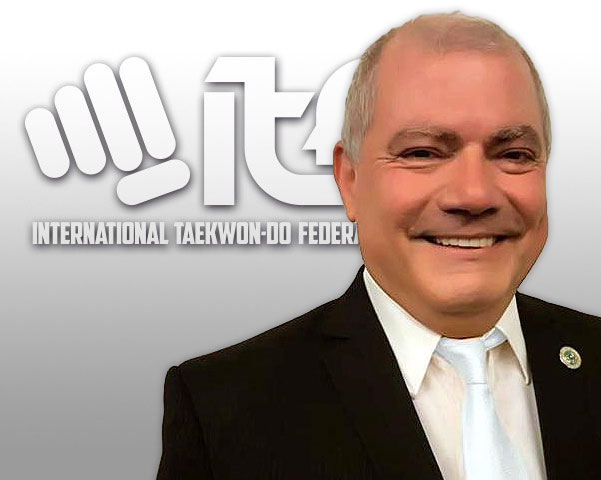
The ITF interviewed GM Abelardo Benzaquén, chair of the Umpire Committee, about the updated ITF Rules of Competition (v2026-1) published in January 2026.
The next World Championships are approaching, and the regulations will undergo some modifications. What are they?
GM Benzaquén: Indeed, we have introduced several modifications to the ITF Competition Rules, which were approved by the Board of Directors. In our view, these are highly significant as they stem not only from our own experience but also from the numerous contributions made by the global ITF community of Coaches, Athletes, Umpires, Instructors, Masters, and Grand Masters. Furthermore, it is worth noting that the final text of these modifications was agreed upon and approved in a joint effort by three committees, the Tournament, the Umpire, and the IT Committee (TUIC) .
Among the most important changes, we can highlight a new paradigm for the scoring system in pattern competition, both individual and team. For individual pattern, we have decided to return to the previous format where athletes perform their patterns simultaneously. However, in our opinion, one of the most critical adjustments has been modifying the spirit of the rules. How can this be explained? Well, it is quite simple: until now, the system had been designed, in a way, solely to “penalize” competitors, which is undoubtedly completely objective, logical, and unquestionable. But over the years, we noticed that while this system was indeed logical and objective, by focusing exclusively on errors or flaws, we were leaving aside a vital part of patterns: their history, real meaning, power, the effective application of techniques, rhythm, beauty of execution, and several other elements that are very difficult to categorize objectively. In short, we now want umpires to also visualize and take into account the “positive” side of patterns. Obviously, there are several other changes, but this response would be too long if I were to address each of them in detail.
What were the reasons behind these changes?
GM Benzaquén: It is worth highlighting that rule changes do not just happen out of nowhere; on the contrary, they are the result of listening to opinions and suggestions, followed by an exhaustive analysis to find the best way to continue optimizing the rules. The fundamental premise is that the champion must truly be the one who best aligns with the original Taekwon-Do technique as taught by Gen. Choi Hong Hi. It is also important to emphasize that before their final approval, these rules were presented by the TUIC to the Chairs of the Coaches and the Athletes Committee, who expressed their satisfaction with the proposed changes.
How will this benefit the competition?
GM Benzaquén: Quite simple: any change that helps us better determine that the winners of each round are truly the best exponents leads us to develop a harmonious competition, without so many interruptions or protests. Naturally, it also upholds the integrity of our Judges and Umpires, always seeking fairness in decisions and, as a priority, the safety of the competitor.
What are the potential changes for the near future?
GM Benzaquén: What an interesting question! In fact, as we well know, Taekwon-Do is a dynamic, “living” martial art in permanent evolution, while of course always keeping the founder’s spirit alive. This has led us over recent years to constantly seek evolution, not only because sports training science introduces us to athletes who are increasingly stronger, faster, and possess incredible technical development and competitive capabilities. Therefore, a significant number of modifications will continue to emerge in the immediate future, namely: the incorporation of more and better technology, ongoing analysis of our current categories, gender matters, the health and integrity of competitors, and many others that would be impossible to describe in this short space.
Is incorporating technology solely an economic matter?
GM Benzaquén: Of course, the economic factor always plays a relevant role when making decisions, but in this case, in my opinion, it would not be the most important one. There are many issues to consider before moving forward, for example, with the implementation of video cameras to resolve protests as they arise. At first glance it seems simple, but we must not forget that our umpiring system is based on the technical and professional, but also human, capacity of our officials, which is sometimes confronted with the data or information presented by technology. It is a highly interesting topic, and I have no doubt that we will have important updates in the near future.
 ITF searches for Social Media Partner














In the adaptive patterns is doing a short pattern or doing a longer pattern more impressive to the judges?