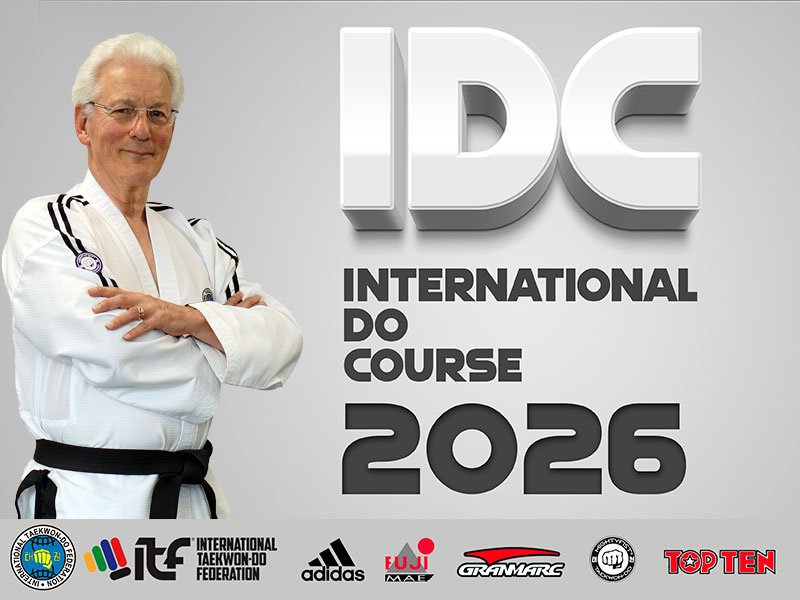
The 19th ITF International Do Course (IDC) was held online on 1 and 15 November 2026. It consisted of four 3-hour sessions over two days, totaling 12 hours. It was formally opened by the President of the ITF, Grand Master Paul Weiler, and conducted in English by the Do and Ethics Committee, which included Master Janel Gauthier (Chair) and, in alphabetical order, Grand Master Abelardo Benzaquén (Argentina), Master Joliette Trân (Canada), and Master Andreu Martínez (Spain).
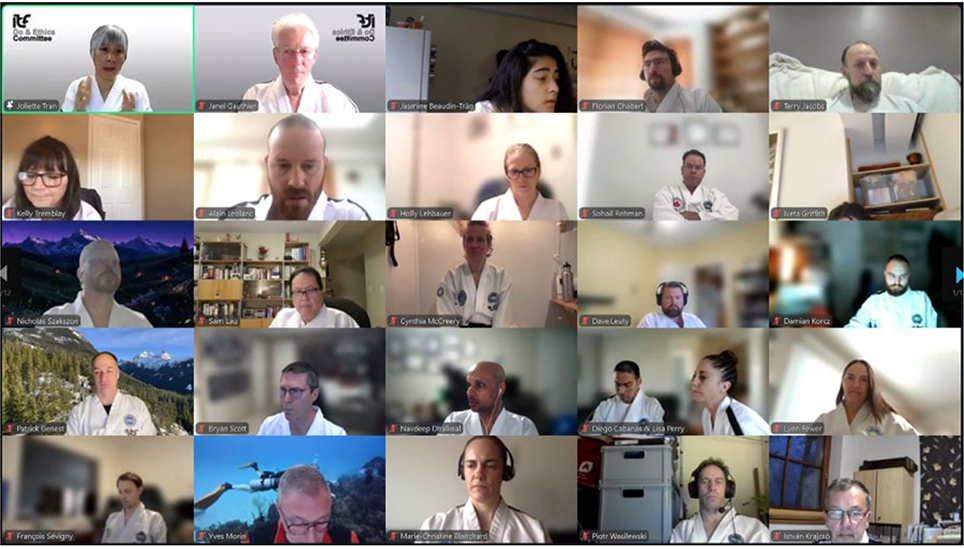
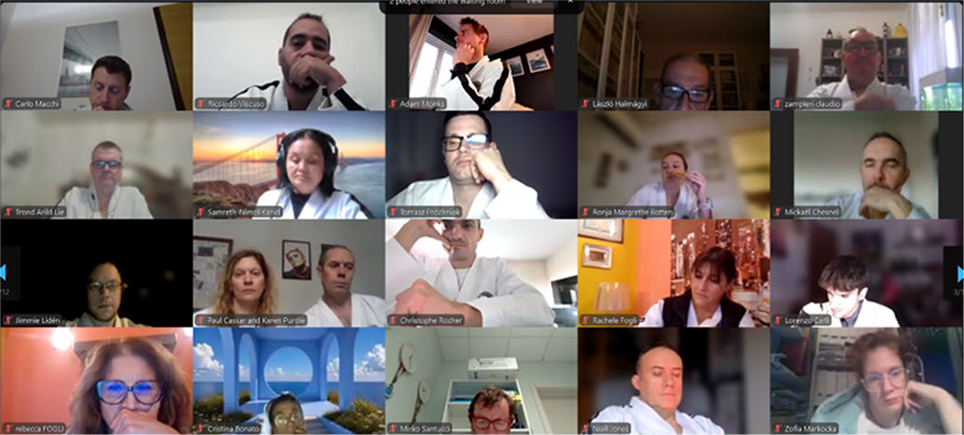
This IDC brought together 335 registered participants from 36 countries, namely (in alphabetical order): Argentina (66), Australia (1), Austria (1), Canada (23), Chile (2), China (1), Colombia (2), Costa Rica (1), Croatia (4), Czech Republic (4), England (31), Finland (7), France (3), Germany (3), Greece (1), Hungary (7), Ireland (24), Italy (54), Latvia (5), Netherlands (1), New Zealand (7), Norway (26), Paraguay (2), Philippines (1), Poland (14), Puerto Rico (3), Romania (6), Scotland (3), Slovenia (2), Spain (3), Suriname (1), Sweden (6), Trinidad & Tobago (3), Ukraine (2), United States (13), and Uruguay (2). Among them were13 Masters, including 2 with an 8th-degree black belt (namely, in alphabetical order, Master Martin Hewlett from England and Master Adrian O’Mahoney from Ireland); and 158 Instructors, including 36 with a 6th-degree black belt. Participants also included the Chair of the ITF Harmony Committee (Master Gastón Casero from Argentina).
IDC participants were provided with AI-generated real-time translation of spoken content into captions in different languages throughout the IDC to help them follow along with speakers by reading captions. Since the quality of the translation may vary depending on a host of factors such as speaking clarity, speakers’ accents, and the complexity of the vocabulary used to teach some of the course content, it would appear that a minimal understanding of the language of instruction may be required to fully benefit from AI translation. However, the quality of the translation has been steadily improving and is highly likely to continue to do so with the help of AI.
During the IDC, participants had the opportunity to learn about a broad range of topics and reflect on many of them. Those included, but were not limited to, the following:
- the moral culture of Taekwon-Do;
- the origin and meaning of the word “Do”;
- the tenets of Taekwon-Do (courtesy, integrity, perseverance, self-control, and indomitable spirit);
- the Student’s Oath;
- the development of moral reasoning from childhood to adult;
- the relations between the psychosocial determinants of human behaviour and the relevance of psychological knowledge in the teaching of Do and the building of moral character;
- ethical decision-making and how to resolve moral dilemmas;
- motivation and perseverance; and
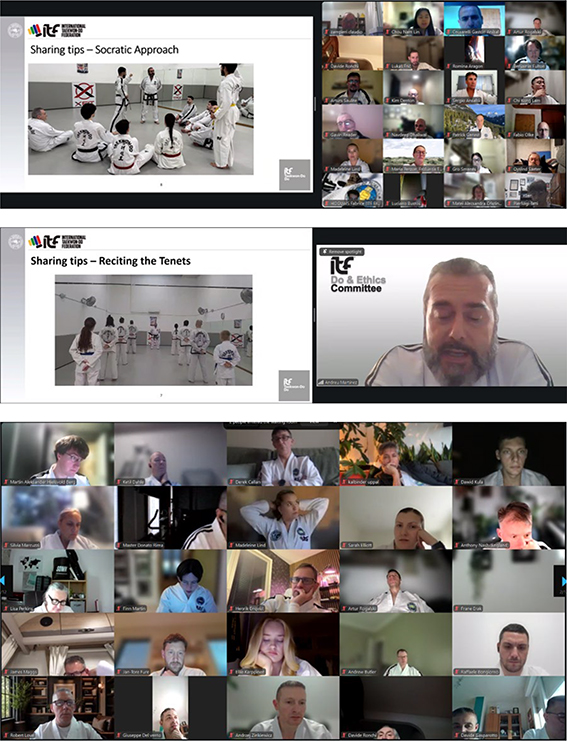
- the integration of the teaching of Do into the teaching of Taekwon-Do (general guidelines and tips).
Those who had already participated in at least one IDC were invited to attend two special 90-minute sessions during the course. These sessions were held in separate virtual meeting rooms at the same time as the other participants were attending the regular IDC program in another room. The first special session was held on Day 1 of the IDC and was designed to reflect on the concept of humility in Taekwon-Do; the second one was held on Day 2 of the IDC and aimed to reflect on the concepts of loyalty and respect.
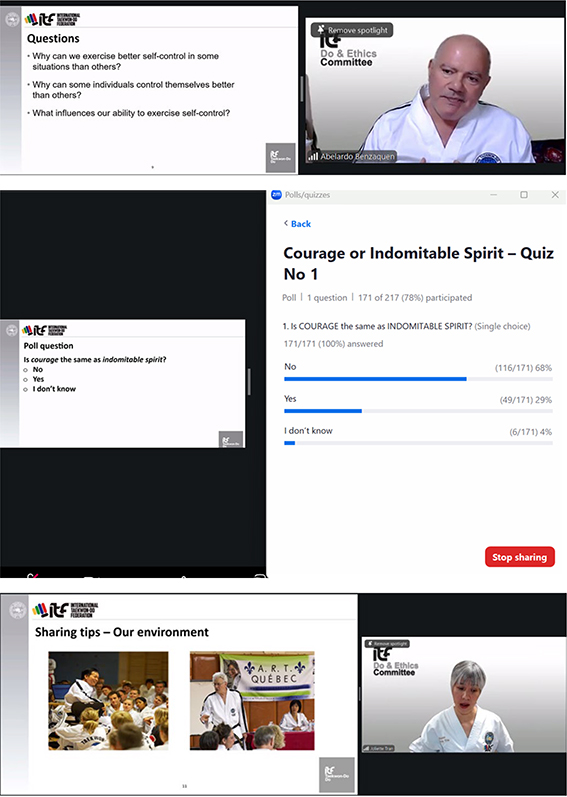
A wide range of activities was used to capture and maintain participants’ attention throughout the day (and for some, throughout the night). For example, participants were polled and challenged with quiz questions during presentations. At other times, participants met in small groups in virtual breakout rooms to discuss a particular issue or find ways to address it before returning to the main meeting room to share some of their ideas with the whole group. Still, at other times, they were challenged with thinking exercises designed to spark their interest and curiosity. In addition, PowerPoint presentations and demonstrations were used to help participants better understand the information presented during the course. A few days before the opening of the IDC, participants were given a link to a web page where they could download a PDF copy of the document showing the slides that would be presented during the course.
Since the 1st of April 2025, ITF members who wish to apply for promotion to 4th degree black belt and above are required to attend at least one IDC during their waiting period to be eligible for testing. The Do and Ethics Committee will conduct four online IDCs in 2027.
Here are the dates and the language of instruction for each one of them:
7 & 21 February (Spanish),
2 & 16 May (English),
15 & 29 August (Spanish), and
7 & 21 November (English).
Further information regarding the 2027 online IDCs will soon be available on the ITF website at https://itftkd.sport/events/category/international-do-course/
Yours in Taekwon-Do,
Master Janel Gauthier, Prof. Dr.Chair, I.T.F. Do and Ethics Committee
 International Exchange: Master Steckiewicz’s Australia-New Zealand tour.