There are many serious students of Taekwon-Do who are experts on how to perform technical details in a correct way – about the “external” side of this beautiful martial art – while not addressing other aspects of Taekwon-Do.
In that sense, for some time now, as a result of a carefully designed plan for standardization and comprehensive education, the Do – that part referring to the metaphysical world, to values, moral standards, conduct, and ethics – has also become a more common topic of conversation.
At the other hand, if there are some closely related aspects that enjoys little prestige, that even displeases and makes people uncomfortable – perhaps because it is controversial, or perhaps because it leads us to question core principles and decisions – they are politics and history.
However, it is unlikely that one can understand the creation of Taekwon-Do first, and later that of the ITF, without understanding – or at least knowing – the political and social context, deeply marked by the reality of a divided Korea and a society devastated culturally, economically, and morally, that surrounded these two events.
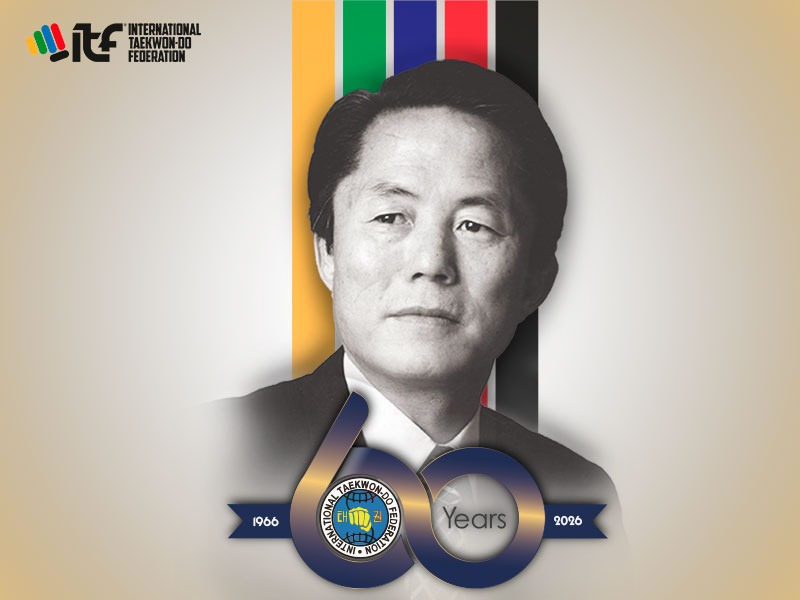
On March 22, 1966, the International Taekwon-Do Federation was born, the result of various factors that triggered the event we are commemorating today.
Going back in time, immediately after the end of World War II, Korea was divided into two. A few years later, that division was consolidated with the creation of two different states: the Republic of Korea in the South (August 15, 1948) and the Democratic People’s Republic of Korea in the North (September 9, 1948).
In Seoul, Syngman Rhee was president [1]; in Pyongyang, Kim Il-sung was the leader.
We would not have the ITF without Taekwon-Do, and in that sense the figure of President Syngman Rhee takes on enormous importance.
It was under his presidency that Choi Hong Hi and a select group of pioneers not only developed Taekwon-Do but also succeeded in having it officially named on April 11, 1955 [2]. They also managed to have it included in the curriculum of the young South Korean army and to have it recognized within the International Military Sports Council [3].
Both figures, Rhee and Choi, had certain things in common that may have influenced these developments. As background, both were born in North Korea; from childhood they were educated under a traditional classical Confucian philosophy; and from a young age they also expressed a strong anti-communist sentiment.
In their own ways and from different positions, both Rhee and Choi opposed Japanese domination, and after the division of Korea they shared a deep desire to achieve the reunification of their country.
In 1959, Choi led a tour to South Vietnam and Taiwan and decided to dedicate himself to the worldwide promotion of Taekwon-Do in the sincere hope that this would provide the means by which the unification of Korea might become possible.
During the first stage of Rhee’s government, in addition to economic reforms, he prioritized literacy as a means of restoring and strengthening national identity – something consistent with what Choi expressed when referring to the birth of his art: “Furthermore, I was motivated by my desire to preserve and spread the spirit and wisdom of the Korean people throughout the world.” [3]
At the end of the war, both men intended to eliminate any vestige of occupation – especially Japanese – and prepare the country so that something similar would never happen again in the future.
And Taekwon-Do – presented by Choi and his pioneers through demonstrations whenever possible – was one of the tools.
However, accusations against Rhee of electoral fraud, extreme political repression, corruption, and civilian massacres led these two men – from the earlier coincidences mentioned – to a clear distancing.
For his part, in addition to establishing the name Taekwon-Do, in 1959 Choi had also achieved an initial unification of some of the kwans within the Korean Taekwon-Do Association [4].
After Rhee’s exile to Hawaii in April 1960, caused by a student uprising against electoral fraud, South Korea entered a democratic period known as the Second Republic.
There was then a provisional government, a president elected by the National Assembly, and a head of government elected by the Lower House – who was overthrown just over a year later (May 16, 1961) by a military coup led by General Park Chung-hee.
Just as it would not be incorrect to say that at the beginning of Rhee’s government the relationship with Choi was good, the same was not true between Choi and Park, even though both agreed that the prevailing corruption had to be eliminated.
The differences between them had a very deep reason that can be summarized by examining the attitude each had taken toward Japan’s domination of Korea.
While Choi had confronted the invaders from an early age – recall that at twelve he was expelled from school for agitation against the Japanese authorities and later imprisoned for being implicated in a conspiracy as a member of the Pyongyang Student Soldiers Movement [5] – the history of the new president was quite different.
Park Chung-hee was born in Gumi, in North Gyeongsang Province, South Korea. He grew up in a rural, lower-class environment, and poverty marked his childhood [6].
Despite adversity, he graduated with top honors from the Daegu Normal School in 1937. His first job was as a teacher, but later he decided to pursue a military career.
It is even said that to be accepted into the military academy, Park wrote a letter of loyalty to the Emperor of Japan with his own blood [7].
In 1940 he entered the Manchukuo Military Academy in Manchuria, whose army operated under Japanese control and direction to maintain colonial order in the region. He graduated in 1942 among the best of his class and was therefore transferred to the Imperial Japanese Military Academy near Tokyo.
Park Chung-hee served and fought in the Imperial Japanese Army (specifically in the army of the puppet state of Manchukuo) against guerrilla forces – including Korean factions – that opposed imperial rule in Manchuria during the Japanese occupation of Korea and World War II [6].
His past as a pro-Japanese collaborator was not only a major controversy during his political life and after his presidency, but also the main reason for Choi’s antipathy toward him.
Choi demanded respect as the creator of the new martial art; Park demanded absolute loyalty as president.
The frictions continued until September 1961, when the Korean Tae Soo Do Association (KTA) was founded as an attempt to unify the different martial arts styles (kwans). Shortly afterward, in 1962, the KTA was recognized by the Korean Amateur Sports Association, and Tae Soo Do was accepted as an official sport in Korea’s national festivals.
Despite this, the years 1961 and 1962 are considered the “maturation” period of both Choi’s military career and Taekwon-Do [8].
If the relationship between Park and Choi was tense and surrounded by intrigue, suspicion, and mistrust, Choi’s appointment as ambassador to Malaysia was not free from misgivings.
It was during this period of Choi’s diplomatic service that, in addition to the already existing associations in Korea and Vietnam, new associations were founded in Malaysia and Singapore.
Between 1964 and the beginning of 1965, Choi returned to Korea. He continued to insist on unifying the nine main kwans under the Korean Taekwon-Do Association.
While Park’s regime stood at a critical turning point – between extreme poverty and famine on one side and the takeoff toward a model of rapid economic development and growth on the other – Choi finally achieved his objective.
Park Chung-hee consolidated his power despite massive protests from students and civilians over the signing of the Treaty on Basic Relations with Japan. At the same time, sending troops to the Vietnam War brought much-needed foreign currency into Korea.
“I shall fight for freedom and justice,” Choi affirmed in the oath prepared for students of his art, while the system established by Park restricted civil liberties in favor of political stability and economic growth.
That same year, Choi was sent by the government on a “goodwill mission” to West Germany, Italy, Turkey, Malaysia, Singapore, and the United Arab Republic (Egypt). In the latter country, “for the first time in Korean history, Choi declared Taekwon-Do to be the martial art of Korea.” [9]
Once again, questions arose about the reasons for this new assignment, once again taking him far from Korea.
Suspicions persisted, since upon his return to the country – due to rumors that he had received certain pressures—Choi resigned from the presidency of the Korean Taekwon-Do Association.
But if one characteristic trait of Choi was his strong personality, another – without a doubt – was his Indomitable Spirit, which became evident every time everything seemed impossible or lost.
“My obsession with Taekwon-Do allowed me to stand firm against the wishes of corrupt government officials who wanted to use Taekwon-Do for political purposes to strengthen their dictatorship. My open criticisms of the South Korean government of yesterday and today have very often been misinterpreted, making me appear as an enemy of my own people.” [3]
With an unsustainable relationship with Park—who had assumed the title of “president for life” – having lost control of the Korean Association, and surely suspecting that the authoritarian regime intended to use Taekwon-Do in some way to achieve its purpose, General Choi decided to preserve his beloved art and, as was his custom, take a new risk.
Thus, in one of the luxurious halls of the old Gyeongseong Railway Hotel – which, under Syngman Rhee’s policy of eliminating any trace of Japan from Korea, had been renamed the Chosun Hotel [10] – General Choi Hong Hi gave another demonstration of determination and strength.
Finally, on March 22, 1966, “the dream of the young and sickly calligraphy student, who became ambassador and president of the most respected martial arts association in the world, came true.”
Using the foundations laid during the previous year’s “goodwill tour,” the International Taekwon-Do Federation was formed with associations in Vietnam, Malaysia, Singapore, West Germany, the United States of America, Turkey, Italy, the Arab Republic of Egypt, and Korea.
Today, sixty years after that day, associations in one hundred fifteen countries across every corner of the planet that make up the International Taekwon-Do Federation celebrate and continue making the dream – the ultimate aspiration – of General Choi Hong Hi a reality: “to spread and teach Taekwon-Do regardless of religion, ideology, national borders, or race,” while preserving its original concept and technique.
Today, on this new anniversary of the ITF, he would surely repeat his own words: “I can say, without hesitation, that I am the happiest man in the world.”
References:
- https://www.britannica.com/biography/Syngman-Rhee (accessed March 15, 2026)
- Choi Hong-Hi, Encyclopedia of Taekwon-Do, 1993, vol.1, page 40.
- Choi Hong-Hi, Encyclopedia of Taekwon-Do, 1993, vol.1, page 7.
- Alex Gillis, A Killing Art: The Untold History of Tae Kwon Do, 2008, page 91.
- Choi Hong-Hi, Encyclopedia of Taekwon-Do, 1993, Vol. 1, page 244.
- https://www.britannica.com/biography/Park-Chung-Hee (accessed March 15, 2026)
- https://www.koreatimes.co.kr/lifestyle/people-events/20091106/data-show-park-chung-hee-pledged-allegiance-to-japanese-army (accessed March 15, 2026)
- Choi Hong-Hi, Encyclopedia of Taekwon-Do, 1993, Vol. 1, page 250.
- Choi Hong-Hi, Encyclopedia of Taekwon-Do, 1993, Vol. 1, page 251.
- https://www.koreaherald.com/article/3632562.
Researched and written by Master Fabián Izquierdo, Member of the ITF Development and Communication Committee
 Productive Week of Preparations for the ITF World Cup 2026 in Benidorm